The Year I Stopped Reading for Pleasure

Nobody told me I stopped. I noticed years later, by accident.


Somewhere in my mid-thirties, I stopped reading for pleasure.

It didn’t happen all at once. There was no decision to make. I didn’t sit down one evening and conclude that books were no longer for me. The change was so gradual that for years I would have told you, if you’d asked, that I was still a reader. I was a person who read books. I had books on my nightstand. I had a list of books I intended to read next.

What I had stopped doing was actually reading them.

Or more precisely: I had stopped reading them the way I used to read them. I read articles now. I read summaries. I read what was relevant to whatever I was working on. I read efficiently, which is a way of reading that has very little to do with the kind of reading I had once loved.

The reading I had loved was different. It was unhurried. It was undirected. It was the specific experience of being so completely absorbed in something I had chosen for no reason except that I wanted to be in it, that I would look up two hours later and be surprised by what time it was. The book wasn’t accomplishing anything for me. It was simply what I was doing. That was the whole point.

I had stopped doing that. And I hadn’t noticed.

――――――――――――――――――――

How It Goes

I want to be careful about how I describe this, because the temptation is to make it sound dramatic. It wasn’t. There was no crisis. No moment of recognition. The way I stopped reading for pleasure is the way most adults stop doing most of the things they used to love: not because they decided to stop, but because the small daily choices stacked up against it.

Work was busy. The work was good — I was building something, I was useful, I was respected — but it took the kind of mental energy that didn’t leave much for reading at the end of the day. So in the evenings I watched something instead. Watching is easier. Watching doesn’t ask anything of you that you haven’t already given to other things.

And then there was the phone. The phone is its own conversation, which I won’t get into here because we all know what the phone has done. But the specific thing the phone did to reading was that it filled the gaps. The five-minute pause that used to be a few pages. The half hour before bed. The waiting room. The line at the coffee shop. All of the small empty spaces where reading used to fit had been quietly occupied by something else.

So the book on the nightstand stayed on the nightstand. And eventually a different book took its place — also unread. The nightstand was still being honored. Just not used.

The years went by like this. I did not feel deprived. I did not miss what I had lost because I had not really registered that I had lost it. I had simply traded a slower, quieter pleasure for a faster, easier one, and the trade had felt, at every individual moment of choosing, completely reasonable.

――――――――――――――――――――

What I Noticed Later


I picked up a book again, properly, by accident.

I was waiting somewhere I couldn’t look at my phone — I won’t bore you with the circumstances. The only thing within reach was a book I had bought months earlier with the vague intention of reading it. I had brought it with me out of similar vague intention, the way you bring a book to a place you know you might be bored, half-hoping you’ll be bored enough to open it.

So I did. And for about forty minutes, something I had forgotten existed came back to me.

It was not the content of the book that did it, although the book was good. It was the quality of the experience itself. The slowness of it. The way one paragraph led to the next without any external urgency. The way my mind moved at the pace of the sentences rather than the pace of an algorithm. The way nothing was being measured — not the time I spent, not what I got out of it, not how it could be applied to anything else.

I was just reading.

I noticed, sitting there, that I had not felt that specific quality of attention in a long time. Years. Maybe more than I wanted to admit.

And I noticed something else, which was harder. I noticed that the part of me that had loved this kind of reading was still there. It hadn’t gone anywhere. It had just been waiting, patient as those things are, for me to give it the conditions to come back.

――――――――――――――――――――

What This Is Really About


I am telling you this story because I suspect you have your own version of it.

Maybe it isn’t reading. Maybe it’s music — the specific way you used to listen to an entire album with nothing else competing for your attention. Maybe it’s walking, the kind without a destination or a podcast or a measured pace. Maybe it’s the long phone call with someone you love, the kind that wandered through three or four subjects without trying to get anywhere. Maybe it’s sitting on a porch. Maybe it’s a meal that wasn’t eaten while doing something else.

Every adult I know has at least one of these. Something they used to do, used to love, used to count on as one of the genuine pleasures of being alive — and somewhere along the way, without a decision being made, they stopped. Not because they stopped loving it. Because the world filled in around it and the thing they loved got crowded out.

The cost of this is real, even though it doesn’t feel like much in any individual moment. The cost is that you stop being the person who has access to that particular kind of pleasure. The reading version of you, the music-listening version, the long-walking version — these versions of yourself get quietly retired. You don’t mourn them. You stop knowing they were there.

And the larger cost, which I think is the one worth naming, is that the capacity for a certain quality of attention atrophies. The reading I had loved required something specific from me: a willingness to be unhurried, to be unmeasured, to give something my time without expecting an outcome. The more I traded that for efficient consumption, the harder the unhurried, unmeasured attention became to access.

Which means the loss is not just the books I didn’t read. It’s a version of me that gets a little harder to summon every year I don’t practice it.

――――――――――――――――――――

The Smaller, Quieter Return


FYI, I am reading again. Slowly. Imperfectly. With more interruptions than I would like and fewer books finished than I keep promising myself.

It hasn’t restored anything dramatic. I am not transformed. I am just a person who reads now, more than I did a year ago, less than I did at twenty-five. The thing I had lost is not gone. It has just had to learn how to share me with everything else.

That is, I think, the honest version of how adult recovery works. Not a return to the unbroken absorption of youth. A negotiation with the rest of your life that allows the lost thing some room. Some hours a week. Some part of a Sunday. Enough that the version of you who loved it can still locate herself when she comes looking.

I want to suggest something to you, if you have your own version of this.

Locate it. Not abstractly. Specifically. Name the thing you used to do that you no longer do, and that you didn’t mean to stop doing. Don’t add it to a list of things to fix. Just notice it. Acknowledge that it’s still in there, the part of you that used to love it. It has been waiting.

Then, if you can, give it twenty minutes. Not as a resolution. Not as a project. As an experiment. See what happens when you sit with the thing you used to love, even briefly, and pay attention to what you feel.

My guess is that something quiet but real will come back. Not all of it. Not the way it was. But something. Enough to remind you that the version of you who loved it is still around.

She has not forgotten you. She is waiting to see if you remember her.

――――――――――――――――――――

This is the third post in The Return, a series on recovering what adulthood costs us. If it resonated, subscribe to get the next one.


-ABB
The Questions You Stopped Asking

You didn’t run out of questions. You learned it wasn’t safe to ask them.

Somewhere between childhood and adulthood, most of us made a quiet decision.

We stopped asking certain questions.

Not the practical ones — those kept coming. Not the professional ones, the research questions, the ‘I’m trying to solve a specific problem’ questions. Those are fine. Those get rewarded. Those are the questions that make you look competent and curious and worth listening to.

I’m talking about the other kind. The questions that don’t have obvious answers. The ones that don’t connect neatly to anything you’re supposed to be working on. The questions that reveal, in the asking, that you genuinely don’t know something — and that the not-knowing isn’t a gap you’re filling but a space you’re sitting in.

The questions you used to ask out loud and eventually learned to only ask in private, and then eventually stopped asking at all.

I’ve been thinking about where those questions go. And whether it’s too late to find them again.

――――――――――――――――――――

What Children Know About Questions

Researchers who study child development have found that children between the ages of two and five ask somewhere around a hundred questions a day. Most of them are why questions. And most of the why questions aren’t simple requests for information.

They’re philosophical.

Why do people die? Why is the sky that color and not a different one? Why do we have to be nice to people we don’t like? Why does anything exist at all?

These are not children’s questions. They’re the oldest questions in human thought — the questions Plato was asking, the questions that have occupied the greatest minds in history and remain, genuinely, unanswered. Children ask them before they can read, without embarrassment, without any sense that the asking reveals a deficiency. Because for a child, asking isn’t a confession of ignorance. It’s a form of attention. The question is how you reach toward a world that keeps being larger than your ability to contain it.

At some point, that changes.

The hundred questions a day becomes fifty, then ten, then close to zero in formal settings. Not because children figure everything out. Because they figure out what questions are for.

Questions, in most adult institutions, are for filling gaps. You ask when you need a specific piece of information you don’t have. You don’t ask the questions that have no answer. You don’t ask the questions that make you look uncertain. You especially don’t ask the questions that suggest the whole framework might be wrong.

Those questions get filed. Quietly. Without ceremony. Under: not for here.

――――――――――――――――――――

The Filing

I can still locate some of mine.

There was a question I had as a teenager about whether the life I was building — the goals I was working toward, the person I was trying to become — was actually the life I wanted, or whether I was assembling it from pieces that had been handed to me before I knew to question them. I asked it once, out loud, to someone I trusted. The response was kind but practical: everyone feels that way sometimes, you’ll figure it out, keep moving.

So I kept moving. And the question went underground.

It didn’t disappear. It surfaced occasionally — usually at two in the morning, usually when something had gone slightly wrong, usually in the form of a vague unease I couldn’t quite name. I got better at putting it back. By my thirties I had organized my life so efficiently around the practical questions that the bigger one rarely found a gap to climb through.

That efficiency, I’ve come to understand, was not wisdom. It was avoidance with good posture.

The question wasn’t gone. It was waiting. Questions like that are patient. They have nowhere else to be.

――――――――――――――――――――

Why We Stop

The reason we stop asking isn’t stupidity or laziness or a failure of intellectual courage. It’s something more understandable than that.

We stop because asking has costs.

The question that reveals genuine uncertainty makes you look like you don’t have it together. In a culture that rewards the performance of certainty — in meetings, in interviews, on social media, in the thousand small transactions of professional life — not-knowing is a liability. The person who raises their hand to ask the question everyone else has pretended to already understand is taking a real social risk. The person who says out loud ‘I’m not sure my whole approach to this is right’ is making themselves vulnerable in ways that most environments don’t reward.

So we learn the performance. We learn to look like we know. And somewhere in the learning, the actual not-knowing — the genuine, productive, generative not-knowing that precedes every real discovery — starts to feel dangerous rather than honest.

The questions don’t stop mattering. We just stop letting them show.

――――――――――――――――――――

What Gets Lost

Here’s what I’ve noticed about the questions I filed away: they were the most important ones.

Not important in the sense of urgent or practical. Important in the sense of pointing at something real. The question about whether I was building the right life wasn’t a crisis. It was a compass. It was trying to orient me toward something I actually cared about rather than something I had inherited and never examined.

The questions we file tend to be the ones about meaning. About direction. About whether the framework we’re operating inside is the right one or just the convenient one. About what we actually believe, underneath the beliefs we’ve found it useful to hold.

These are uncomfortable questions. They don’t resolve quickly. They don’t produce action items. They require a quality of sitting-with that the busy, efficient, well-organized adult life systematically discourages.

But they’re the questions that, when followed honestly, lead somewhere. Not to certainty — the questions worth asking rarely produce certainty. To clarity. To the specific, hard-won sense of what you actually think, underneath the performance of thinking.

That clarity is worth the discomfort. Most of us just never gave it the time.

――――――――――――――――――――

The Invitation

I want to try something with you.

Think back — not to your professional history or your accomplishments or the narrative arc of your adult life. Think back to a question you used to ask that you’ve stopped asking. Not a practical question. A real one. The kind that didn’t have an answer and made you slightly uncomfortable and pointed at something you cared about more than you were willing to admit.

Maybe it was about your work: not whether you’re good at what you do, but whether what you do is what you’re actually for.

Maybe it was about a relationship: not whether it’s functioning, but whether you’re fully present in it or moving through it on automatic.

Maybe it was bigger than either of those. The question about what any of this is for. About whether the life you’re living is the life you chose or the life that accumulated around you while you were busy with other things.

You don’t have to answer it today. You don’t have to answer it at all. The answering is not the point.

The point is to locate it. To acknowledge that it’s still there, patient as it ever was, waiting for you to have enough quiet and enough courage to let it back in.

Because here’s what I’ve found: the questions you filed away didn’t stop being relevant when you stopped asking them. They went quiet. They’re not gone.

And the life that makes room for them again — that stops performing certainty long enough to sit with genuine not-knowing — tends to be a more honest one. More alive to what’s real. More capable of being surprised.

More worth living, in the specific way that the things you actually chose are worth more than the things that just accumulated.

――――――――――――――――――――

What’s the question you stopped asking?

I’m genuinely asking. If something surfaces while you read this, I’d like to hear it.

――――――――――――――――――――

This is the second post in The Return, a series on recovering what adulthood costs us. If it resonated, subscribe to get the next one.


-ABB

When Did You Last Feel Genuinely Stopped?

Most of us can’t answer that question as quickly as we should be able to.

There is a specific quality of experience that most adults haven’t felt in longer than they can remember.

Not happiness. Not success. Not the mild satisfaction of a productive day or a good meal or a deal that came together the way you hoped.

Something older than those things. Something that used to arrive without warning and now, for most of us, doesn’t arrive at all.

The experience of being genuinely stopped by something.

Not surprised in the way that an unexpected email surprises you. Not pleased in the way that good news pleases you. Stopped. The way a child stops in the middle of a busy sidewalk because something in a store window has caught their attention so completely that the rest of the world temporarily stops mattering. The way you stopped, once, at a piece of music or a view or a conversation that went somewhere you didn’t expect, and felt — just briefly, just for a moment — that the world was larger than you had been allowing it to be.

Try to locate the last time it happened. Really try.

For most people, the answer takes longer than it should.

――――――――――――――――――――

The Question I’ve Been Sitting With

I’ve spent the last few years thinking about why that is. Why a capacity that every one of us had as children — the capacity to be genuinely astonished by the world, to be stopped by it, to feel it as larger than our ability to contain it — becomes so hard to access in adult life.

The easy answer is that we get busy. That the demands of adult life — work, responsibility, the relentless forward motion of a life with things in it — leave no room for the kind of open, unhurried attention that astonishment requires.

That’s part of it. But I don’t think it’s the whole story.

Because the busiest people I know are sometimes the most alive to the world. And some of the least busy people I know have somehow made themselves completely unavailable to surprise. Busyness is a contributing factor. It isn’t the cause.

The cause is something more gradual and more interesting. Something that happens not in a single moment of loss but in the accumulation of a thousand small decisions to stop paying a certain kind of attention. Decisions that made sense at the time — that were, in fact, the decisions a functional adult is supposed to make — but that had a cost nobody told us about.

――――――――――――――――――――

What Leaders Know About This (Whether They Name It or Not)

Here is something I’ve noticed in the leaders I most admire, and in the leaders I’ve watched struggle.

The ones who sustain genuine effectiveness over a long career — not just competence, but the kind of leadership that actually changes something — almost always have a quality that is surprisingly hard to name. It’s not strategic brilliance, though many of them have that. It’s not emotional intelligence, though that matters too. It’s something more like a sustained capacity for genuine surprise.

They walk into rooms still actually wondering what they’ll find there. They ask questions they don’t already know the answer to. They encounter a piece of data or a person or a market shift and their first response is not to categorize it and file it away but to sit with it long enough to understand what it’s telling them.

The leaders who struggle — the ones who hit a wall after years of success, who find their organizations going stale around them, who can’t quite understand why the playbook that worked for a decade has stopped working — have almost always lost this. Not their skills. Not their experience. Their capacity to be genuinely surprised by what’s in front of them.

They’ve confused their model of the world with the world itself. And the world, being the world, has moved on without asking permission.

I’ve done this myself. Most leaders I know have. It’s not a character flaw. It’s what happens when you get very good at something. The expertise that makes you effective also makes you, if you’re not careful, progressively harder to surprise.

And a leader who can’t be surprised can’t learn. And a leader who can’t learn is, eventually, finished — even if the results haven’t shown it yet.

――――――――――――――――――――

The Distinction Nobody Talks About

We talk a lot about curiosity in leadership and personal development circles. Be curious. Ask questions. Stay open. It’s good advice and most of it is genuine.

But I’ve come to think that curiosity and the thing I’m describing are not the same thing.

Curiosity fills gaps. You have a question, you find the answer, the question closes. Curiosity is the thing that drives you to Google something, to read the article, to ask the follow-up question. It’s enormously useful. It’s how expertise gets built and problems get solved.

But the experience of being stopped — the specific quality of astonishment I’m pointing at — does something different. It doesn’t fill a gap. It reveals that the map you’ve been using is smaller than the territory. It doesn’t answer a question. It shows you that you were asking the wrong question, or a question too small for what’s actually out there.

Einstein didn’t look at a compass at age five and get curious about magnetic fields. He got stopped. He felt, in the wordless way a five-year-old feels things, that the world worked differently than he had assumed. That something was happening that no one had fully explained to him. That the universe was stranger and more interesting than the adults around him seemed to think.

He spent the rest of his life following that feeling.

Curiosity would have resolved the compass. The other thing — the thing that’s harder to name — kept the question open for decades until it produced a theory of relativity.

Most of us lead with curiosity. The leaders and thinkers and creators who produce something genuinely new have usually found a way to keep access to the other thing as well.

――――――――――――――――――――

What I’m Writing About in This Series

Over the next several months I’m going to be writing about this — about the specific capacity to be genuinely astonished by the world, what happens to it in adult life, and what it looks like to recover it.

Not as a self-help proposition. Not as a productivity hack or a wellness practice or a leadership framework, though it touches all of those things. As something more fundamental: an argument that the quality of your attention — the degree to which you are genuinely open to being surprised by the world — is one of the most important things about you. That it shapes your work, your relationships, your leadership, your creative life, and your experience of being alive in ways that most of us have never been explicitly invited to think about.

Each post will look at a specific aspect of this. How it gets suppressed — by expertise, by routine, by the distraction economy, by the very success that we’re all working toward. And what the return looks like — not as a dramatic transformation but as a daily, imperfect, renewable practice of approaching your own life with something closer to the attention it deserves.

Some of it will be research — neuroscience and psychology and philosophy that illuminates what’s actually happening when we feel this and why we stop feeling it. Some of it will be the stories of people who kept the capacity alive — or found their way back to it — in the middle of full and demanding adult lives. Some of it will be personal, because this is not a subject I can write about from a distance.

I’ll start here, with the question.

When did you last feel genuinely stopped by something?

If the answer came quickly — yesterday, last week, this morning on the way to work when the light did something unexpected — then you have something worth protecting. This series is about how to protect it.

If the answer took longer than you expected, or if you’re still looking for it — that’s worth paying attention to. This series is about that too.

――――――――――――――――――――

This is the first post in The Return, a series on recovering what adulthood costs us. If it resonated with you, subscribe to get the next one.


ABB

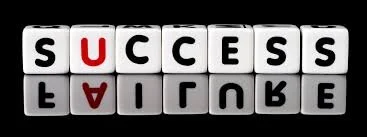
Success from Failure

success.jpg

Are you not going after what you want, because you’re afraid to fail?

I think this sums up a lot of the procrastination I’ve put myself through, and I have a good feeling I’m not alone.

What if we adjusted our thought process on failure? What if we realized that failures were more powerful and influential on our future success than anything else we can do? Would we feel differently? Would we pursue our dreams with a different vigor?

If you’re delaying your dream, I want to try to help you today. You’ll never get to where you want without embracing the failures. I’m a content producer. And I haven’t produced any meaningful content in almost a year. And I’ll never get any better at producing content without…obviously…producing content.

One realization that has helped me recently is understanding the statistic that in just 1 day in 2021, more content is produced than in the entirety of the 1940s. That’s unbelievable! And it’s freeing. It’s freeing to know that what I produce isn’t going to change the world. But it may help someone, and it will definitely help me to get better at my craft.

So there’s really no down side to doing what I love…which is writing…and trying to help people. And the only way I learn is by succeeding or failing. And the only way I succeed and fail is to do.

So you and I are just going to start doing the things that get us closer to where we want to be in life. Deal?

Robert Schuller asked, “what would you attempt to do if you knew you wouldn’t fail?” The fear of failure is crippling. The acceptance that failure is part of success is freeing.

There are a lot of things we would try, but we don’t because we’re afraid we’ll fail. But if you’re learning from trying, it’s not failing. If you’re progressing because you learn from every new failure, you will succeed.

Continual success is a result of continual failing and learning. Failure is one of the greatest teachers in life.

So let’s decide that the fear of failure is no longer going to keep us from trying!

We’ll learn together and grow together.

Hope you have the best week…I’ll talk to you soon!

-AB

Hope and Kindness

I keep thinking we need a restored hope in human interaction.

It’s so easy to see the negativity in our culture, and react to the point where we conclude that human beings don’t care about anyone else but themselves.

But if you seek the good nature in others, you find some amazing truths about how we should be treating one another.

It’s usually found in difficult situations: natural disasters / caring for the homeless / helping the sick / etc.

But I think if we start to see the good in people in our everyday interactions, we have the opportunity to not only enrich our own lives, but project that energy into the people we come in contact with (and especially strangers).

As the saying goes, no man is an island. You are the product of your environment and the people you do life with.

I’m focusing on positivity and believing in the good nature of human beings. It’s a broken world with broken people, but I think we’re all looking for the light at the end of the tunnel. The light that we can provide for each other.

You never know what just one intentionally positive moment can have on someone else’s life. There’s plenty of room and time and space for these micro-moments to happen. Just be open to the idea.

If you have a story to share about small good deeds, I always love to hear them. Comment or shoot me a message.

God bless,

-ABB

A Simple Formula

hand-writing-math-formula-glass-board-96517930.jpg

There seems to be a really easy formula for success. The thing is, everybody already knows what it is. There is no secret to it. It’s just execution. And maybe people are inherently lazy and not focused or driven. And that’s why the cream always rises to the top.

So here’s the recipe that everyone already knows:

1) Find something that you’re passionate about. It should be something you’d do even if you never made a dime doing it.

2) Learn the craft. Read about it…watch videos about it…digest from the experts.

3) Practice every day…until you become the expert you were reading about in step 2.

4) Work your face off (but it’s ok…it won’t feel like work because it’s your passion, remember?)

If you’re an artist, learn the business side of your art. If you’re a businessperson, learn the art of how people work.

That was simple right? And we all know this is easy in theory. It’s the rest of the stuff that’s hard. Being a person of action and execution and self-awareness.

Ok, so there’s a few places where this easy 4 step process goes awry:

First, you have the people that never truly follow their passion. Maybe they never had the opportunities to dream…but the mundane and the “normal” become acceptable.

Second, you have those that were passionate about something that they never had the innate skill set to do. My passion could always have been to play power forward for the Lakers. But as a 5’9” relatively nonathletic person, that was a limiting factor. I can work my entire life and have amazing passion for basketball, and it’s not going to happen for me.

Third, you have the group of people that is the most frustrating. It’s the ones that know their passion and know what they need to do to accomplish their dreams, they just don’t execute. Every day goes by in regret. Maybe it’s not worth the effort, or maybe settling is the answer.

So, what do we do?

Maybe life is ok following the status quo?

For me, this keeps me up at night. I want more. Maybe you do too.

Find some like-minded people that want what you want. Be willing to put in the work for the life you want to live. Maybe don’t listen to Mom’s short-sided opinions…idk.

But we know the formula. We know what needs to be done. What would happen if we for once just followed through?

It’s a journey…I’m learning and taking it with you.

God Bless,

-X

It's Just a Post

public.jpeg

For far too long, I’ve dreaded writing here because I was worried that I didn’t have anything profound or important to say. I’ve allowed the intimidating thoughts in my head cripple my ability to put words to real use.

I kinda think I’m moving past that now.

I think I’m finally realizing that the only way to really improve and make something worthwhile is to just keep doing it. It’s not going to be pretty…it’s not going to be the most polished piece of work. But it’s something, and I think that’s really important.

That being said, I’m just writing a post. I’m performing the practice out loud, for you to see the process. Maybe we’ll all look back in 10 years, and say, “man he has come a long way!” Or maybe it’s so insignificant at this point that no one would dare dig that far back.

It’s an important distinction for me. It’s content. It’s practice. It’s perfecting my craft. Maybe I’ll be a great writer. Or maybe not. Either way, I want to give it a chance to be something.

And nothing never creates something.

I’m not even editing this post. It’s just a post. Stop making it a bigger deal than it actually is.

Stop making your art or creativity or outlet bigger than it should be.

Just keep working at it consistently, and you will get better. Maybe not all-time great…but better every time.

Here’s to the dreamers! But know that dreamers have to be doers or the dream remains stuck inside the nothingness of your imagination. Dreams are much more fun actualized and realized.

God Bless…let’s do this thing! :)

-X

What's With The Attitude?

I’m here to make some changes to my attitude. I think this is very important, so if any of this resonates, let’s make some updates and refreshes to our attitude to improve our lives.

Your attitude isn’t everything…but it’s important enough to ride in the front seat of the car of your life. Maybe not the driver…but at least riding shotgun.

I believe there are a few distinct ways to make our attitudes our greatest asset…not a hindrance or barrier, that perhaps we’ve let it be for entirely too long. Let’s take a look…

  1. We need to take responsibility for our attitude. It’s not genetic or set in stone…it’s a personal choice. We have to decide that our attitudes are not a byproduct of our circumstances or outside ourselves…it always comes from within.

  2. We need to evaluate our present attitude. Let’s make the decision now…if our attitudes aren’t as good as they should be, let’s take that responsibility and start to make some shifts. The key will be to look at yourself objectively and with some keen sense of self-awareness, and to separate yourself from your attitude.

  3. We need to develop the desire to change. Most people desire improvement, but resist change. When improving our attitudes, we need to be ready for both. Change is never easy, and it requires a good amount of energy and perseverance. Cultivate the desire for change as a part of your daily routine.

  4. We change our attitude by changing our thoughts. Your mind has some pretty incredible powers. What holds your attention holds your actions. This is why your attitude is within your control, because you do have the ability to control your thoughts. I love the saying,

    “you are not what you think you are, but what you think…you are.”

  5. We need to develop good habits about our attitude. A lot of what we do every day comes from habitual behaviors. Over the course of time, we have developed a way of approaching life. If your attitude has been less than stellar, it’s time to make some changes to those behaviors. The good news is habits aren’t instincts, so it may take some time…but it’s subject to change.

So, if we take some personal responsibility for our attitudes…recognizing that it can change how we live…then we can make our attitudes our greatest asset. And then, watch how it affects our daily interactions and the projection of our success.

Here’s to you!

God bless,

-ABB

Pivots

What are pivotal moments made of? Is it one decision, or a group of them combined to actually make a difference for change? Sometimes I wonder how far I need to be pushed to make a pivotal decision.

Truth is: I’m really hoping I’ve been pushed far enough to make some changes professionally. The pivot is always in place, it’s just a matter of deciding to move that other leg. It’s a basketball reference, and the one that populates in my head when I think of pivoting my life and my career. Take what you’ve been given and move the other step.

Part of the shift is this piece right here…putting thoughts into place and documenting the journey. The other part is much more complex, and I’m looking forward to putting in the work and chasing after what I feel that I was always called to do.

Some days will be the rambling of a mind that’s searching for potential and purpose. Other days will be a record of the highs and lows that come along with building out a business and a brand.

The pivot has been a long time coming. And it’s just the first one in a long-tail game that I want to play for the rest of my life.

It’s Monday…let’s go get it!

-ABB

The Power of Passion

Passion is the motivation you need to write the next sentence…

Passion is the key to making hard work not feel like hard work…

Passion is the launching pad for greatness…

Passion is the stuff dreams are made of…

Passion holds the light at the end of the tunnel…

Passion is the difference between an average day and a meaningful day…

Passion cannot be vanquished for the elite performer…

Passion will not relent…

Passion encourages the best in each of us…

Passion is defined as a strong and barely controllable emotion…

Passion needs to be in the driver’s seat of your life…

Passion is not a hobby…

Passion can only be summoned by you…and can only be squashed by you…

Passion always requires courage to chase…

Passion enables us to overcome obstacles…

Passion shapes our existence…

Passion is energy…

Passion is love…

Dare to imagine what a life filled with passion looks like…dare to imagine the possibilities…dare to dream out loud, and to live with passion…to live your passion.

…Sometimes we need to define something before we live it…

God Bless,

-ABB